The 1°C Deception: Why 90% of BAS Energy Savings Die at the Sensor Level
Jan 27, 2026You spent hundreds of thousands of dollars upgrading to Magnetic Bearing Chillers. You installed top-tier VFDs. You even rewrote your entire BMS logic sequence.
But your monthly energy bill is still laughing at you.
Why? Because you ignored the $20 component.
This is the brutal reality.
In the world of Building Automation Systems (BAS), data is oxygen. If you feed your system garbage, the output will inevitably be short-cycled compressors and wasted operational budget. According to recent studies by NIST (National Institute of Standards and Technology), a temperature sensor drift of just 1°C can increase total HVAC energy consumption by 10% to 15% [Source: NIST Building Efficiency Report 2026].
At Focus Sensing, we see this "invisible murder" of efficiency in our labs every day. Today, I am going to pull back the curtain on the specs that general datasheets hide, and show you exactly how to choose the true "sensory organs" for your Honeywell or Siemens controllers.
Many people think a sensor is just a wire with a resistor at the end. Dead wrong.
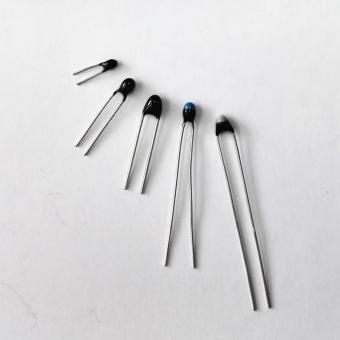
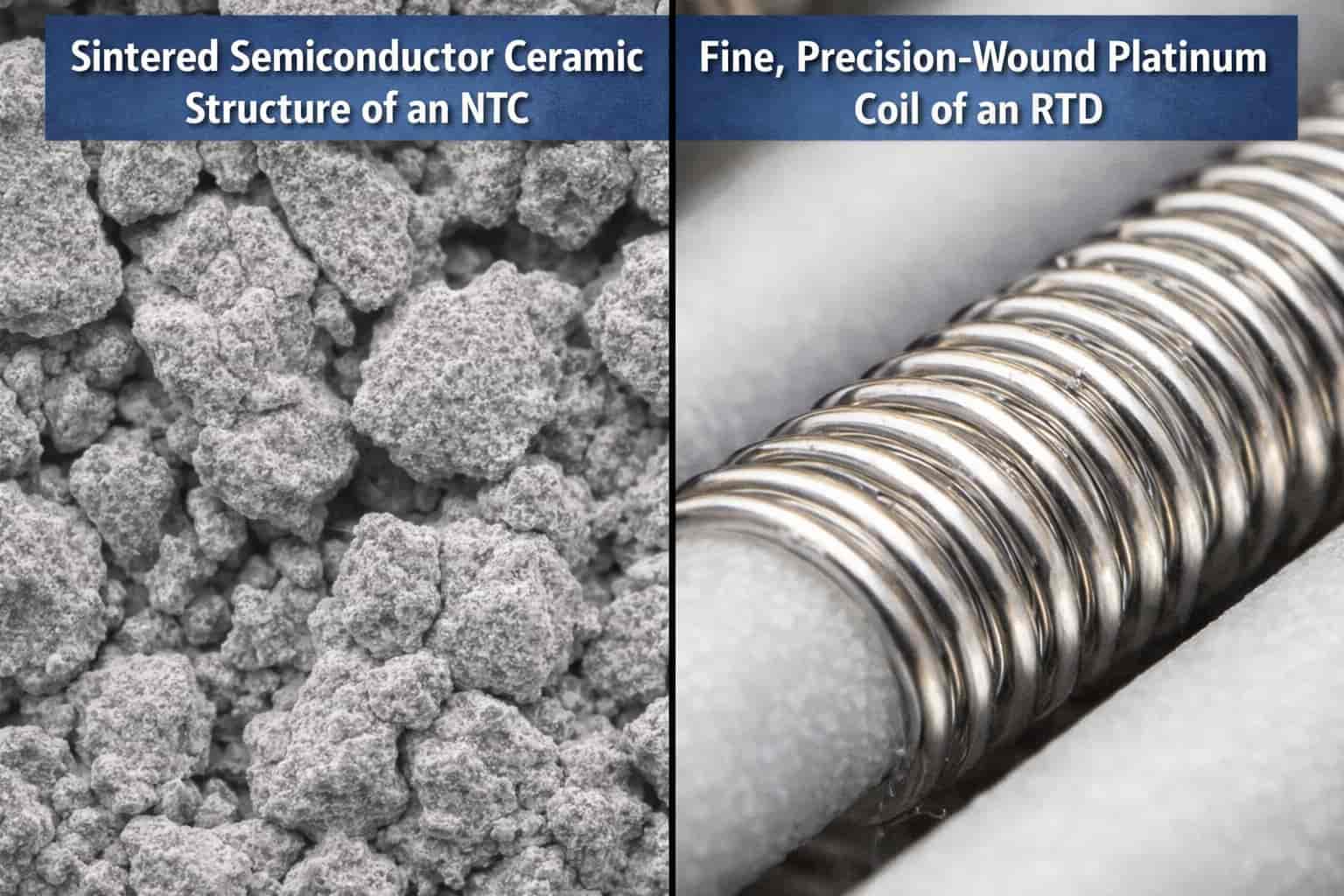
Choosing between an NTC (Negative Temperature Coefficient) thermistor and an RTD (Resistance Temperature Detector) is, fundamentally, a choice of control philosophy.
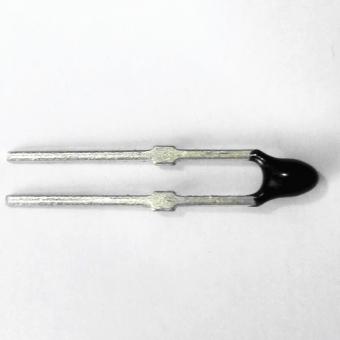
The majority of commercial Air Handling Units (AHUs) and VAV Boxes use NTCs. Why? Because they are hypersensitive. A $1°C$ change in temperature results in a massive change in resistance. This means your controller can instantly detect even the slightest laminar airflow fluctuation.
Pros: Fast response, low cost, strong signal.
Cons: Severe non-linearity (more on this later—it’s a killer).
When Focus Sensing provides OEM solutions for pharmaceutical clean rooms or surgical suites, we almost always specify Pt1000. It uses pure Platinum. Its linearity is nearly perfect.
But that doesn't mean you should use RTDs everywhere.
On the Stupidity of "Over-Design":
Honestly, I see too many consultant engineers specifying Pt100 Class A sensors for standard office Return Air ducts.
Stop it. You are burning money.
In comfort cooling applications, you need the rapid response of an NTC, not the laboratory linearity of an RTD. Furthermore, the signal from a Pt100 is so weak that if your wire run exceeds 30 meters, the resistance of the copper wire itself will introduce more error than the sensor is trying to correct (unless you pay extra for a 3-wire setup).
Focus Sensing’s Advice? Spend money where it counts. Use high-quality NTC 10k for general ducts. Use Pt1000 for critical process control. Don't sacrifice Signal-to-Noise Ratio (SNR) for bragging rights.
This is the most critical part of this article. This is where 90% of integrators fail.
You grab your multimeter. At $25°C$, it reads 10kΩ. Perfect. You install it.
Winter comes. Outside air drops to $0°C$. Your BMS reads the temperature as $2°C$, but your Freeze Stat trips and shuts down the unit.
What happened?
You bought the wrong B-Value (Beta Value).
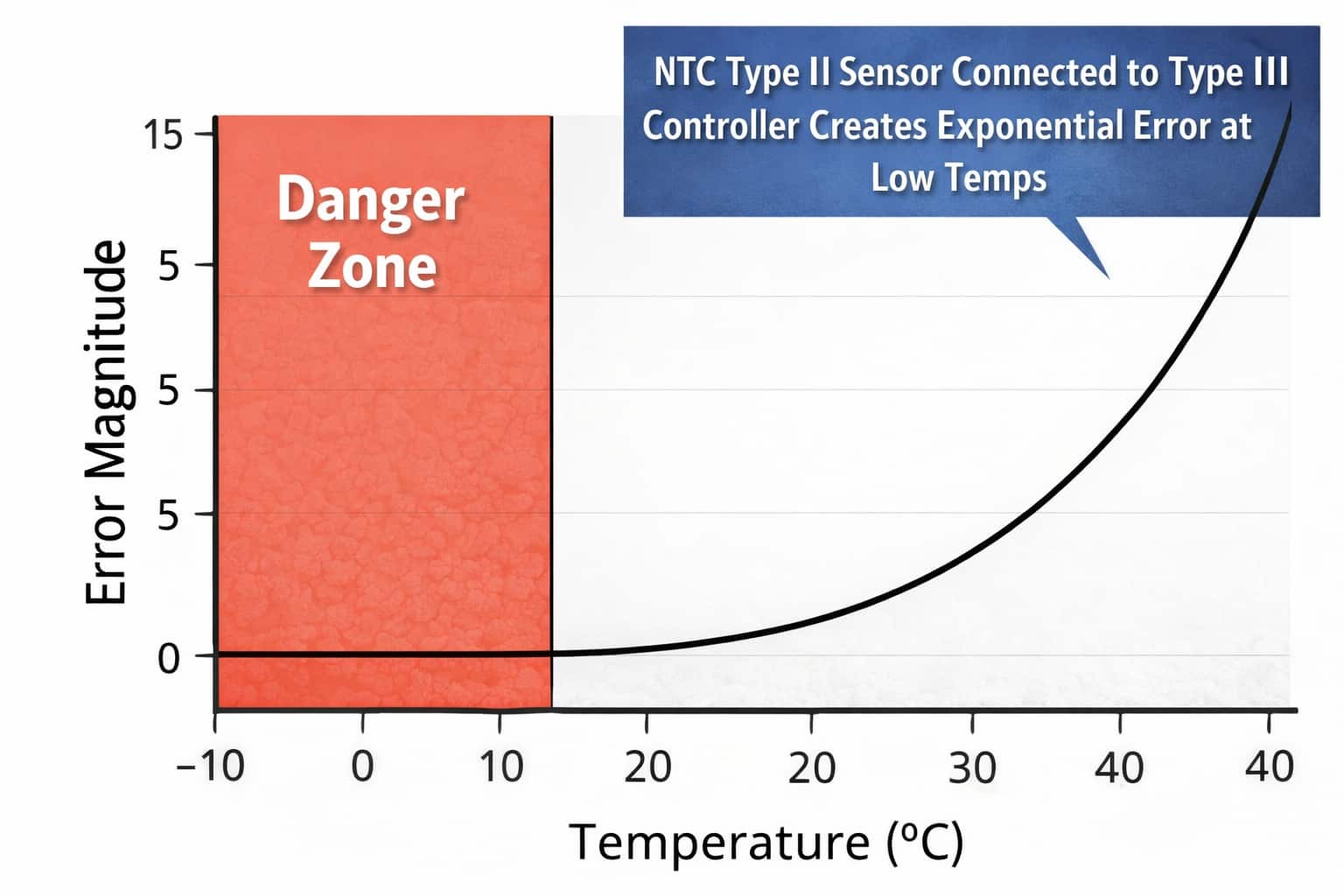
While they are both sold as "10k NTCs," the Type II (CP) and Type III (AN) curves are radically different. The $B_{25/85}$ for Type II is typically around 3950K, while Type III is around 3694K.
At $25°C$, they match. But at $0°C$, the deviation can be a staggering $1.5°C$ to $2.0°C$ [Source: ASHRAE Handbook - Fundamentals].
This means your system thinks it's safe, but your coils are already freezing.
On the Focus Sensing production line, we don't just calibrate the $25°C$ baseline. We strictly control the B-Value tolerance. Our FS-D Series Duct Sensors come with pre-matched R-T curves for Trane, Honeywell, and Johnson Controls, ensuring full-range accuracy within $\pm 0.2°C$.
The inside of an HVAC duct is a hostile world. Condensation, high velocity, and chemical residue from cleaning agents.
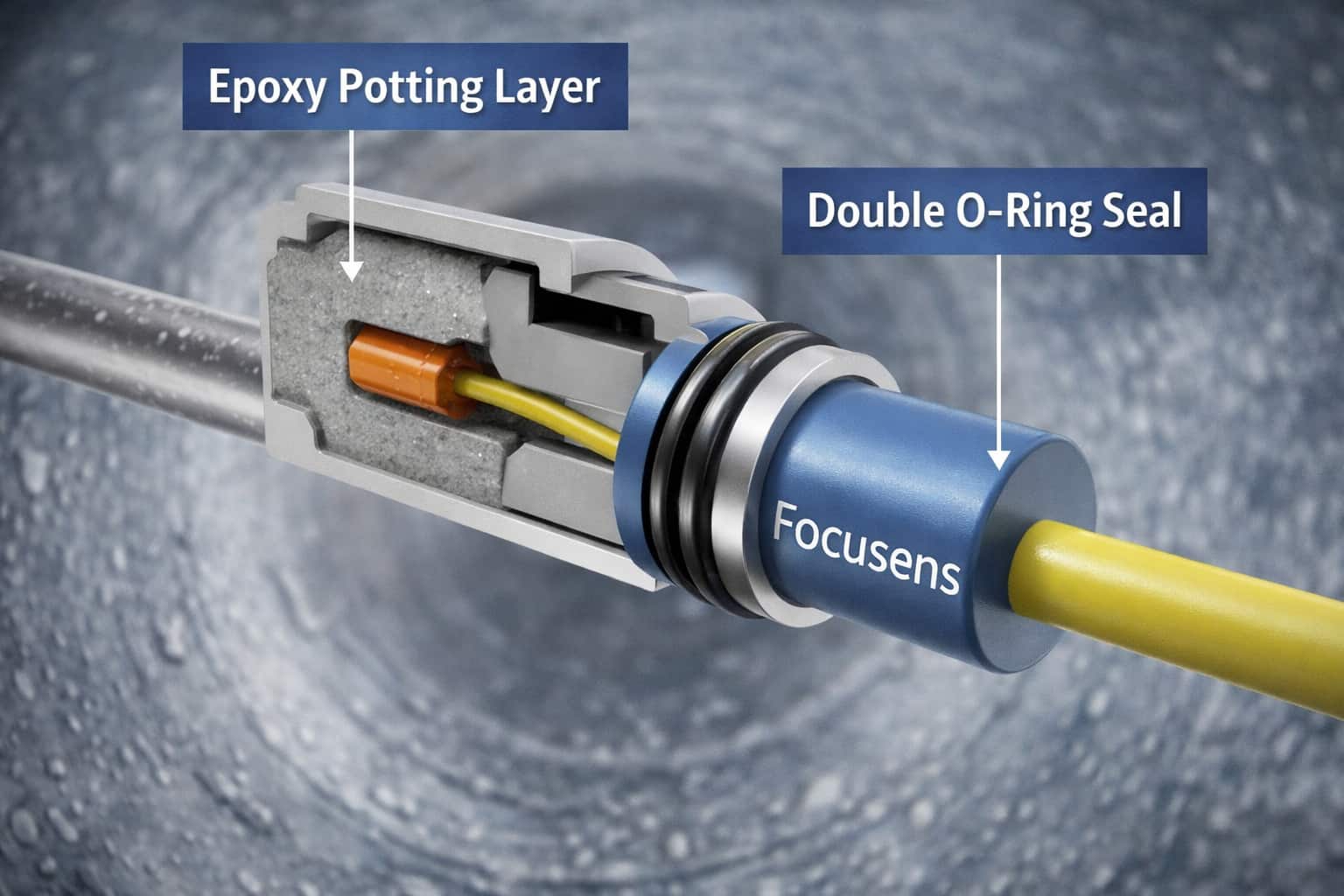
If your probe is simply heat-shrunk or uses a cheap plastic snap-on housing, moisture will penetrate within 6 months. Once the PCB gets wet, the resistance drifts (usually reading lower resistance = higher temperature).
The system thinks it’s too hot, so it opens the chilled water valve 100%. Energy is quietly bleeding away.
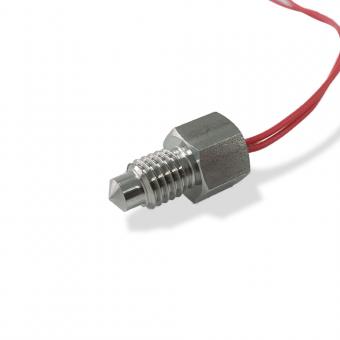
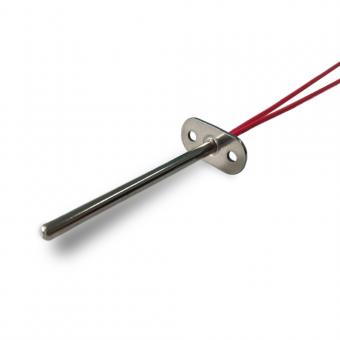
304 Stainless Steel Probes: This isn't for looks. It is to prevent Galvanic Corrosion when in contact with galvanized sheet metal ducts.
Double-Shot Molding: Our junction boxes aren't just glued. We use an integrated injection molding process combined with military-grade Epoxy Potting.
Stop guessing. Based on 15 years of OEM experience, here is your cheat sheet.
| Feature Dimension | NTC 10k Type II (CP) | NTC 10k Type III (AN) | RTD Pt1000 (Class B) | Focus Sensing Recommendation |
| Compatible Brands | Trane, Honeywell, JCI | Andover, Carrier, Alerton | Siemens, Distech | OEM Custom (Available) |
| Sensitivity ($\Delta R / \Delta T$) | Very High (Fast Response) | High | Low (But stable) | Depends on dynamics |
| Drift Per Year | $< 0.2^\circ C$ | $< 0.2^\circ C$ | $< 0.05^\circ C$ | Mission Critical Areas |
| Best Application | Comfort Cooling (AHU) | VAV Zone Control | Lab / Pharma / Billing | Focus Sensing FS-D Series |
| Cost Efficiency |
|
|
Volume Pricing Available |
The Truth About Brand Tax:
Let's be real. When you buy that sensor stamped with a major HVAC brand logo, you are paying a markup that can exceed 400%.
Guess what's inside? Usually, a generic NTC element manufactured by a third party.
As long as the Curve Matching is correct and the Packaging is robust, there is zero reason to pay for the logo. Focus Sensing manufactures for top global brands; we know that physics doesn't care about the sticker on the box.
If you can get the same specs—often with better stainless steel—for 1/3 of the price, why wouldn't you? Spend that budget on better control algorithms instead.
In the world of HVAC, "close enough" is not good enough.
A sensor that is off by $2°C$ doesn't just mess up your PID loop; it steals your operational budget while you sleep. When you see a Chiller roaring at partial load, or a VAV damper hunting wildly, don't blame the software yet.
Check the probe in the duct.
At Focus Sensing, we don't just make hardware; we manufacture certainty. From our 0.1% tolerance Pt1000 wafers to our double-shot injection molding, every probe is built to let you—the System Integrator—sleep soundly at night.
Do not let a hardware oversight become the graveyard of your software intelligence.
1. Pre-Install Verification
[ ] B-Constant Check: If the controller is Honeywell/Trane, confirm sensor is Type II (B=3950); if Andover/Delta, confirm Type III (B=3694).
[ ] Insertion Length: Probe length must cover 1/3 to 1/2 of the duct width. For ducts >2m, have you switched to an Averaging Sensor?
[ ] Material Audit: For corrosive air (pools, lab exhaust), is the probe 304 or 316 Stainless Steel?
2. Physical Installation
[ ] Turbulence Avoidance: Is the sensor in the Laminar Flow zone? (Must be at least 3x duct diameters downstream from fans or elbows).
[ ] Stratification Check: Is the sensor placed where hot/cold air streams have fully mixed?
[ ] The Drip Loop: Is there a "U-bend" in the wire before it enters the box? (Prevents condensation from running down the cable into the PCB—Fail cause #1).
3. Commissioning
[ ] Ice Bath Test: When in doubt, wrap the probe in an ice/water slurry. Does it read $0^\circ C \pm 0.2^\circ C$?
Termination Torque: Are the terminal block screws tight? Loose connections = added resistance = false high temp readings.
Still not sure which sensor matches your legacy controller?
Don't risk it. Use the [Controller-Sensor Matcher] above to get the official Focus Sensing verification in 3 seconds.
Or, if you are facing specific OEM customization needs—like custom flange sizes, specific cable lengths, or private labeling—contact our Engineering Team directly. Let us help you remove "uncertainty" from your supply chain.
[Start Selection Now] | [Download PDF Checklist]
No.1 XiSan Road, Electromechanical Industry Park , High&New Tech.Zone. Hefei,Anhui,China
tel : +86-551-69109668
Whatsapp : +86-13339100504
e-mail : info@focusens.com
Skype : melodyliu520






 +86-551-69109668