TemperatureSensor & HVAC Sensors Insights — Precision Matters in Smart HVAC
Dec 08, 2025Central air conditioning in homes and businesses offers comfort that goes beyond just temperature. This sentence discusses how consistently and accurately someone keeps the environment.
The human body can sense temperature changes as small as 0.3 °C. This is especially true in places like offices, hotels, and luxury homes. When a thermostat or sensor is off by 1.0 °C, the system overreacts — this causes uncomfortable temperature changes, wastes energy, and leaves people unhappy.
That's why the difference between a ±1.0 °C sensor and a ±0.3 °C sensor is important — crucial for any serious HVAC or Smart HVAC system.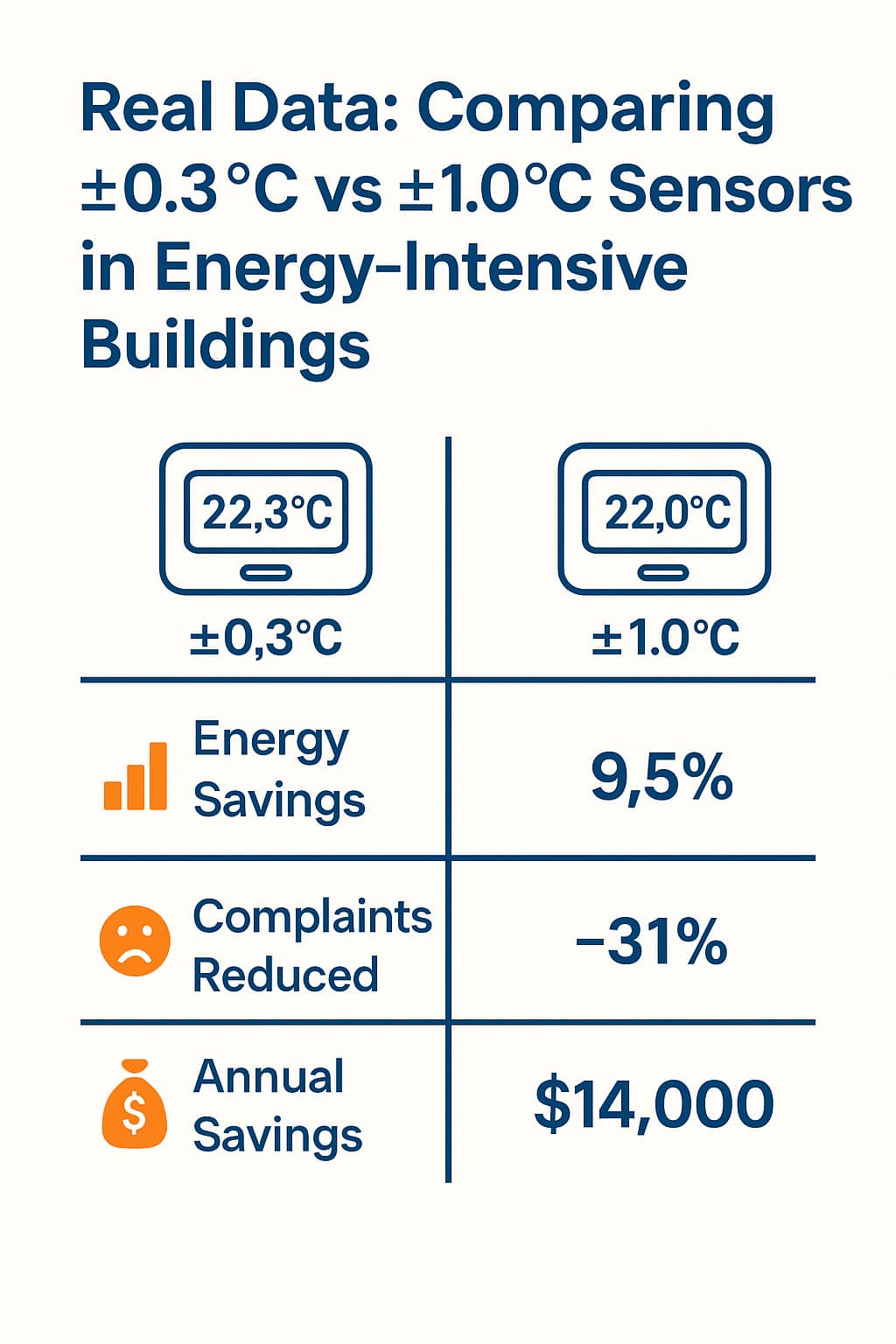
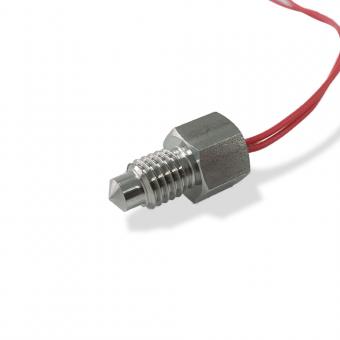
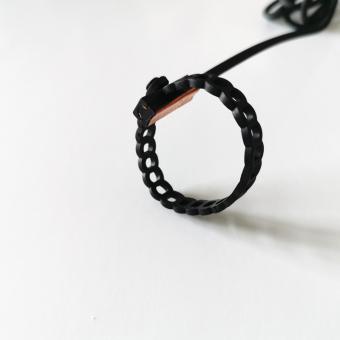
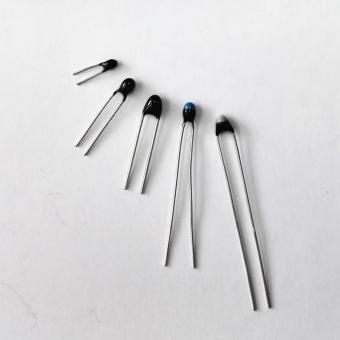
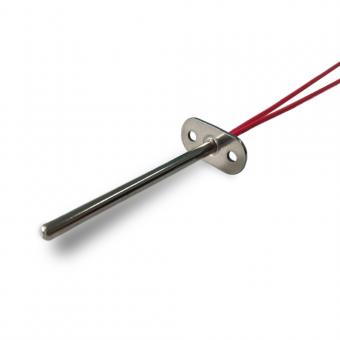
Today, many HVAC systems offer similar core features — heating, cooling, and basic automation. In a crowded and similar industry, what makes a system stand out is what it senses — including the accuracy of the TemperatureSensor.
High-precision sensors, often underestimated, directly impact system responsiveness, energy usage, and long-term performance. The following real-world examples highlight the performance gap.
| Case | Scenario | What Changed After Upgrading to ±0.3 °C Sensors |
|---|---|---|
| Residential Villa – Vancouver, Canada | High-end villa installation | 31% reduction in climate-related complaints; lower system cycling frequency; homeowner comfort rated 4.7/5 |
| Hospital HVAC Retrofit – Seoul, South Korea | Operating rooms / medical-grade HVAC | Achieved ±0.2 °C environment stability; HVAC fluctuations reduced by 42%; better compliance with medical-grade standards |
| Office Complex – Munich, Germany | Commercial office HVAC | ±1.0 °C → ±0.3 °C: 9.5% annual energy savings (~€18,000); improved employee productivity; HVAC downtime reduced by 17% |
| 5-Star Hotel Chain – Singapore | Guest rooms & hospitality HVAC | Improved “room climate” review scores; lower chiller workload during peak months; ~US $11,000 annual savings per property |
Industry reports show that a misreading of just 0.5 °C can cause energy overuse — up to 8% — in energy-intensive zones like commercial kitchens and data centers. Precision — not just features — underlies real energy efficiency and comfort.
People now value modern HVAC systems for more than just heating and cooling. They should integrate smoothly with other building systems — lighting, security, automation, and building management systems (BMS).
Commercial settings prefer HVAC systems using open protocols and third-party sensors (e.g. Modbus, BACnet, 0–10 V interfaces). Choosing energy-saving systems now involves:
At Focusens, we specialize in high-precision temperature and humidity sensors tailored for building HVAC systems. Our ±0.3 °C and ±0.2 °C sensor models are designed to meet modern HVAC demands:
We have helped HVAC integrators, facility managers, and system designers across Asia, Europe, and North America — supporting them in building smarter, more efficient climate control systems.
Precision matters more than ever — and your clients will feel the difference, literally. If you're ready to upgrade your system’s brain — the sensors — we are ready to help.
Have you ever experienced sensor-based system drift or poor performance due to inaccurate sensors in one of your HVAC projects? Tell us your experience — we’re eager to know how precision sensors made a difference.
No.1 XiSan Road, Electromechanical Industry Park , High&New Tech.Zone. Hefei,Anhui,China
tel : +86-551-69109668
Whatsapp : +86-13339100504
e-mail : info@focusens.com
Skype : melodyliu520






 +86-551-69109668